
INSIGHTS
Why Physical Spaces Must Earn the Visit
October 30, 2026
When convenience no longer requires a place, the place itself must become the reason to go.
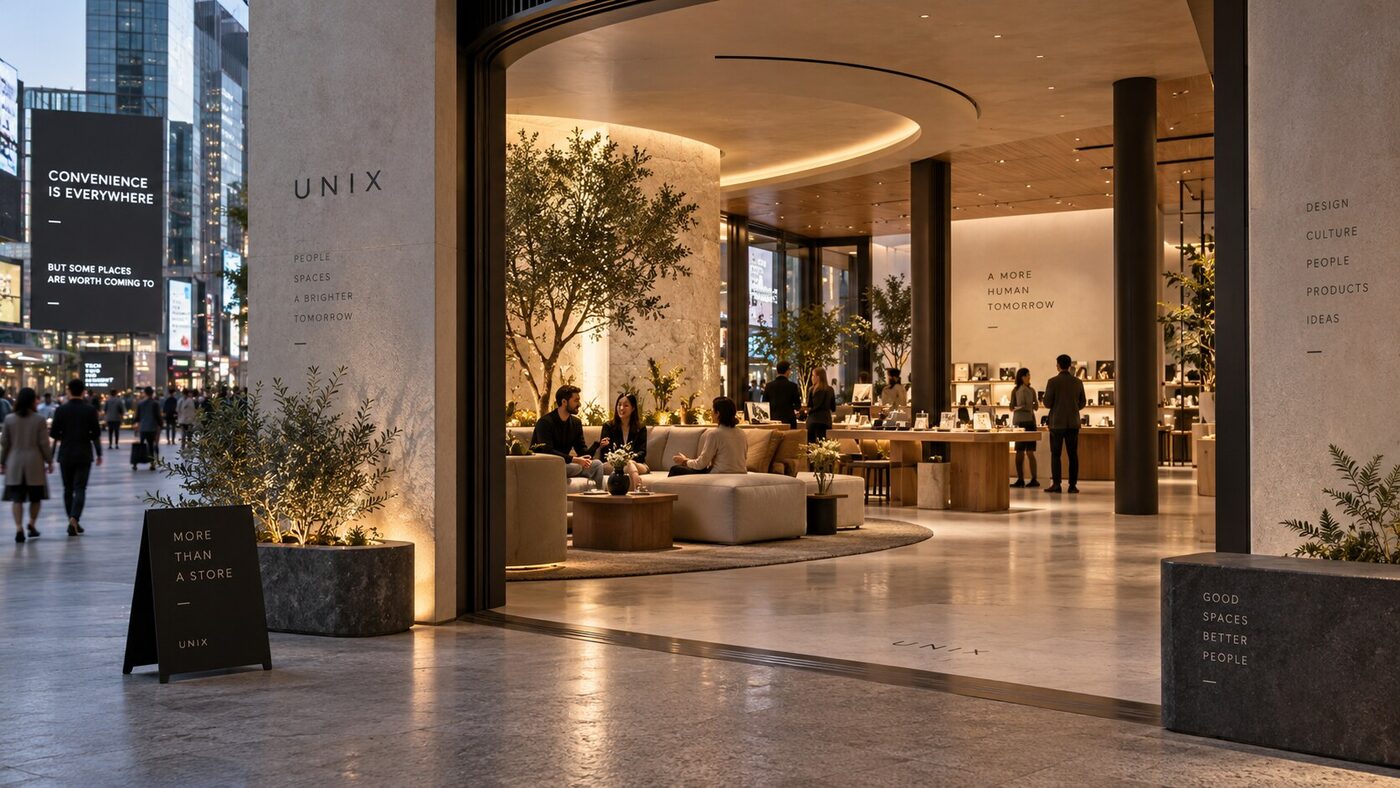
That shift changes the role of retail, hospitality, showrooms, exhibitions and branded environments.
This is Part III of our series on the future of physical space in the age of AI. Part I looked at why physical presence may become more valuable as digital communication becomes abundant. Part II looked at why execution matters more when ideas become cheap.
Convenience Changes the Role of Place
If people no longer have to go somewhere, why would they choose to?
For much of modern commercial life, physical spaces were built around necessity. People went to a store because that was where the product was. They went to an office because that was where work happened. They went to a service counter because that was where the transaction could be completed.
Digital systems have changed that assumption. Ordering, paying, researching, comparing, meeting and learning can often happen without entering a physical environment at all. AI will likely accelerate that convenience layer further.
This does not make physical space obsolete. It changes the question physical space must answer.
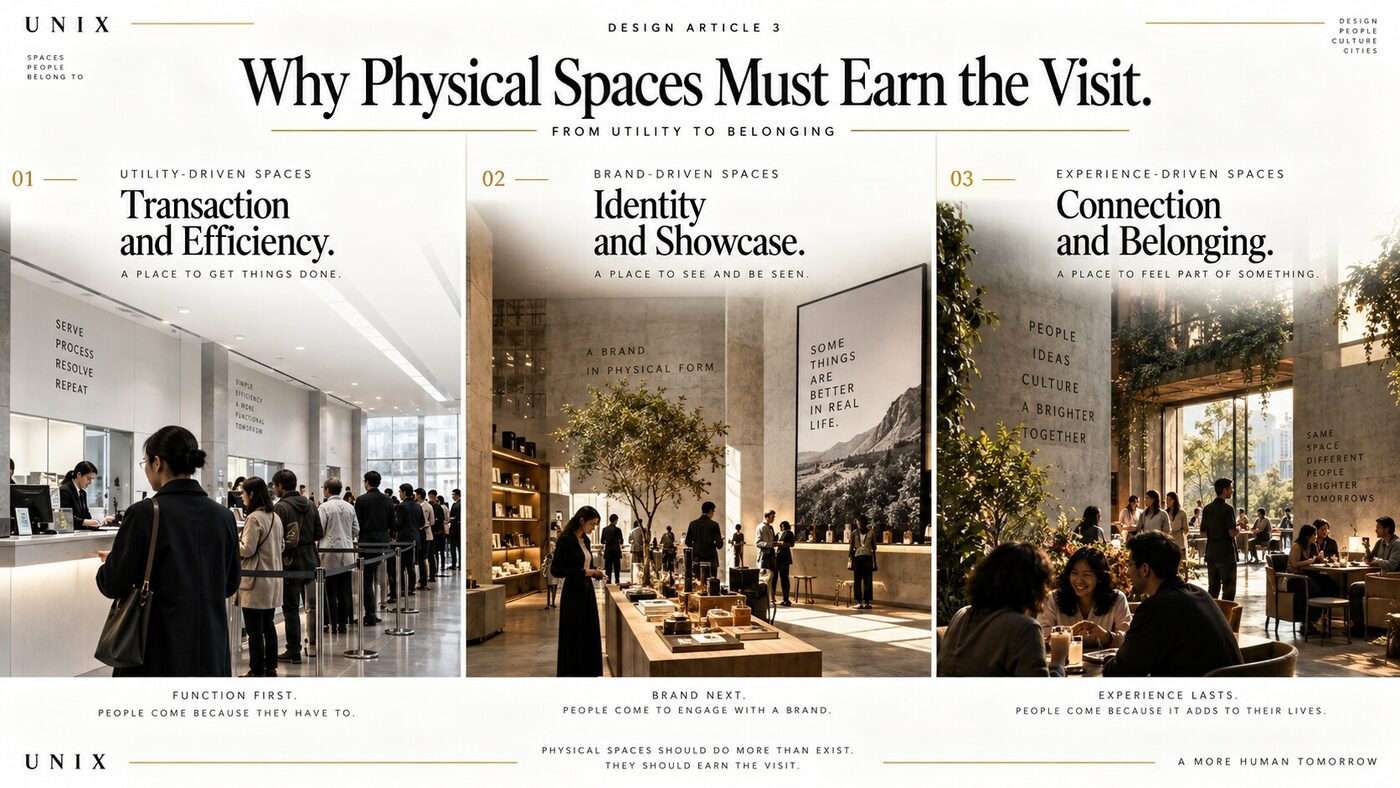
Transaction vs. Connection
Convenience removes friction. Experience creates meaning.
A fast digital transaction is valuable because it respects time. It helps people order, pay, collect and move on. In many categories, that is exactly what customers want.
But physical environments have a different opportunity. They can slow people down in a productive way — helping customers discover something, meet someone, feel a material, understand a brand and remember the experience later.
Starbucks is a useful signal here. After building significant digital and mobile-ordering convenience, the company has also emphasized coffeehouse redesigns, additional seating and renewed attention to stores as places for connection.[1][2]
The relevant lesson is not about coffee alone. It is about the strategic role of a place when the transaction itself can happen elsewhere.
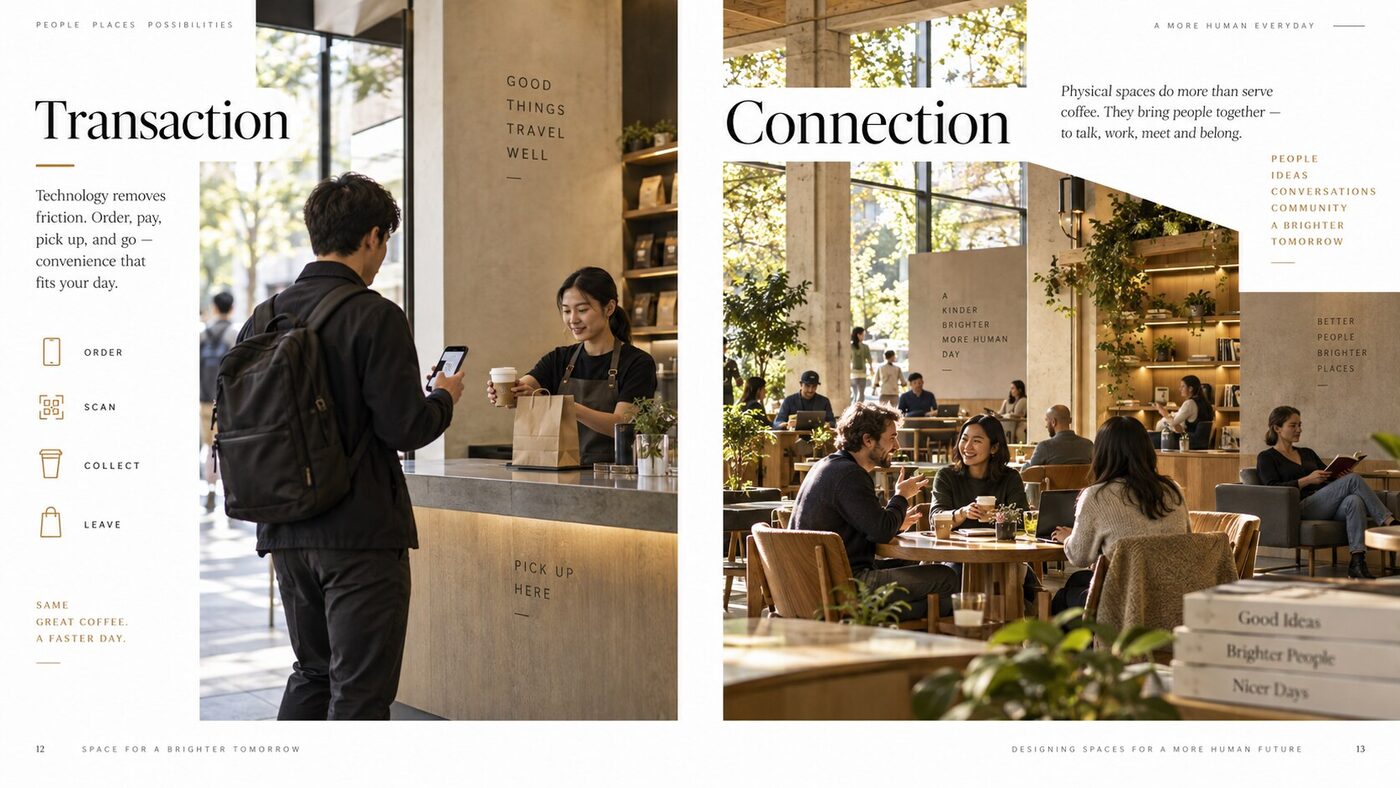
1. Speed has a place
Convenience remains valuable where people want speed, clarity and ease.
2. Places need a second job
Physical environments should support conversation, discovery and atmosphere.
3. Experience builds memory
Materials, comfort and human interaction help turn a visit into something memorable.
4. This is a wider signal
The same logic applies to exhibitions, showrooms, hospitality spaces and branded interiors.
Exhibitions Show the Problem in Concentrated Form
A booth is a choice architecture problem.
Exhibitions have always lived under this rule. Nobody is forced to enter a booth. The visitor is moving through a crowded hall, surrounded by alternatives and limited by time. The space must earn attention, then convert attention into engagement.
That makes exhibition design a prototype for the wider future of commercial space. The same logic increasingly applies to showrooms, retail environments, hospitality spaces and branded interiors.
The design task is not only to display the brand. It is to create a reason to approach, enter, explore, talk, stay and take something forward.
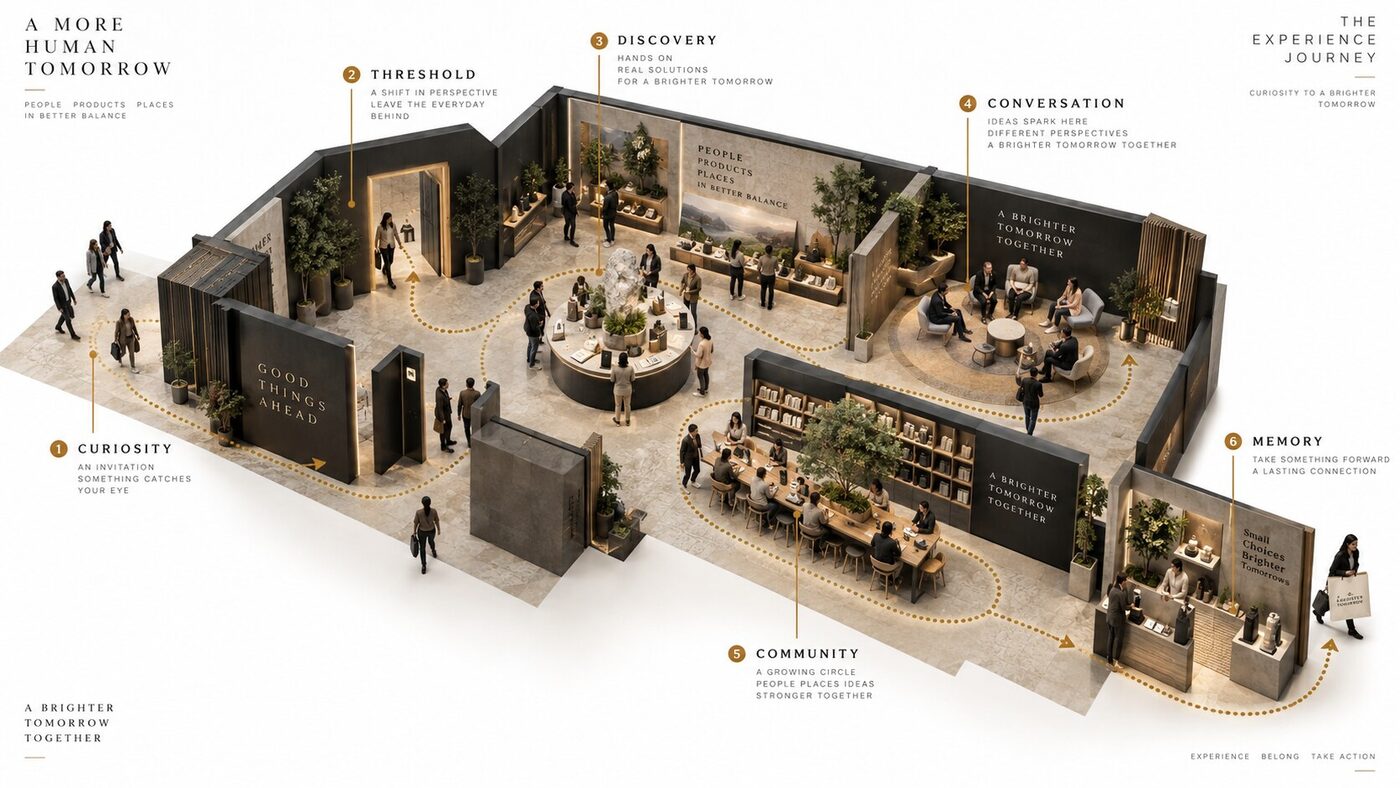
Designing Spaces That Earn Participation
The new standard is not presence alone, but chosen presence.
To earn the visit, a space must do more than look good. It has to offer a form of value that the customer cannot fully replace with a screen.
That value can be sensory: material, scale, light, sound and atmosphere. It can be social: conversation, community and shared presence. It can be cognitive: helping people understand a product or service faster by experiencing it. And it can be emotional: turning a brand into a memory rather than a message.
The strongest spaces will likely combine these layers. They will respect convenience, but they will not stop at convenience. They will give people a reason to choose physical participation.
The Unix View: What This Means for Brands Building Physical Environments
Unix sees exhibition and commercial spaces as environments that must earn participation. A booth, showroom or branded interior should not be treated only as a container for products or graphics. It should be designed as a reason to gather, discover, talk and remember.
The digital world can remove many functional reasons to visit. That raises the standard for the physical world. The most valuable spaces will be the ones that create something people still choose to experience in person.
Frequently Asked Questions
Why do physical spaces have to earn the visit?
Ordering, paying, researching and meeting increasingly happen without entering a physical space, so a place can no longer rely on necessity. It has to offer something a screen cannot fully replace: sensory experience, human interaction or a clearer understanding of a brand or product.
What is experiential space design?
Experiential space design is the practice of designing physical environments — such as exhibition booths, showrooms, retail and hospitality spaces and branded interiors — around what people feel, do and remember there, not only around what the space contains.
Why is a trade show booth a good example of this challenge?
Nobody is forced to enter a booth. Visitors move through a crowded hall with limited time and many alternatives, so the space has to earn attention first and then turn it into engagement. That makes exhibitions a concentrated version of the challenge facing all commercial spaces.
What does it mean to design a space that earns participation?
It means designing for chosen presence rather than presence alone: giving people a sensory, social, cognitive or emotional reason to approach, enter, explore, talk and stay.
Start a Project With Unix →
From concept and fabrication to installation, Unix helps brands turn ideas into physical environments that work in the real world.
Sources: [1] Starbucks — 2026 company strategy update · [2] Starbucks — more than 1,000 coffeehouses redesigned across the U.S. and Canada